

We’ve been doing this for a while. It’s been observed, tested and validated independently by academia across the US and Canada, but the real value proposition of what we’re doing just dawned on me. When it comes to the world of AI, data security is far more interesting and valuable than just protection and lock down.
Security can sometimes be viewed as a sunk cost or just a necessary element in the enterprise ecosystem. That’s not my view but I’ve been on the receiving end. You pay the tax to avoid the liability, protect the reputation, and move on. I get it. But lately, we’ve been looking at this from a slightly different angle. Because when you actually design an agentic AI security infrastructure correctly, the byproduct flips that entire cost narrative on its head.
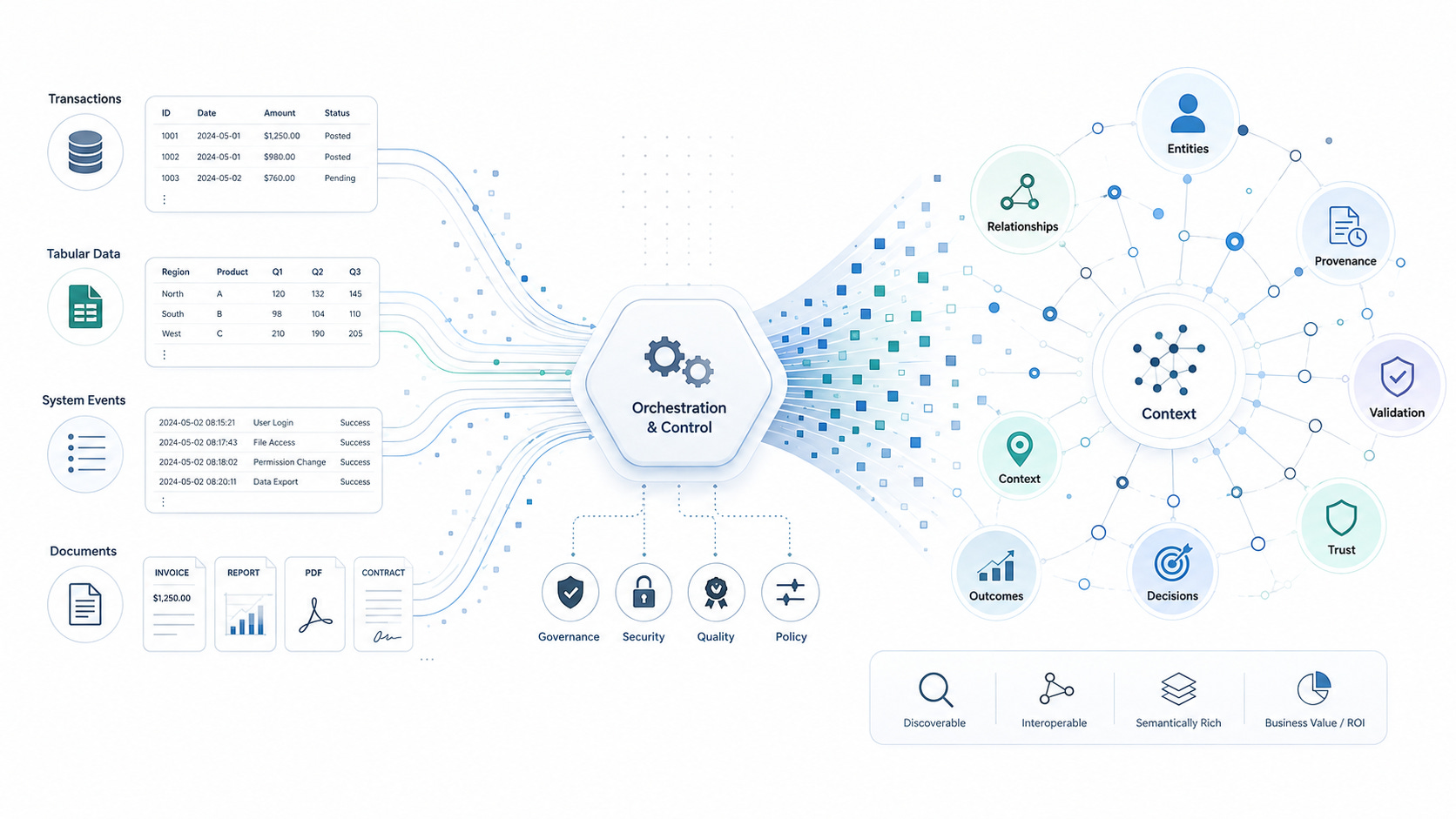
We normally think of forensics as something you need after something goes wrong. But if you design it into the runtime architecture, you’re continuously creating something incredibly valuable: contextualized evidence about data, entities, relationships, decisions and outcomes.
The Byproduct of Forensics is Data
Forensics does not have to be an after-the-fact investigative process where you are just digging through logs trying to figure out what blew up. When done right, it can actually be the lifeblood of models that deliver extreme accuracy and value. We’ve seen this first hand and proven it well beyond the capabilities of frontier models when … and this is important … leveraged the right way.
That is the power of Forensic Observation. And yes, I just made that term up but it seemed to fit perfectly.
CharliAI has been heavily focused on the Forensic Trace as part of our control plane layer and that very byproduct has delivered structured, enriched, and semantically related details that have been an absolute gold mine in training models. Just take the FISCAL model that our team presented at NeurIPS, which was independently verified. It is specialized, small, efficient, and ridiculously fast. We use it to cross-verify and validate formulas and financial numbers produced by the frontier models. It works and it works incredibly well specifically because of how it was trained and what it was trained with.
It may use a similar underlying transformer architecture to everything else out there but the real beauty and scalability is in the training scaffolding. That training is a direct result of a byproduct in how the forensic control plane operates in the wild.
Context and Relationships
True forensics requires both situational awareness and entity smartness. That combination operating in chaotic real-world scenarios establishes the perfect ground truth for training. And not ground truth in the sense that it will ever let you compete with frontier models for their primary function, but it will deliver best-in-class specialized functions.
We refer to the process behind the scenes as contextualization of data regardless of the source. Architecturally it’s designed into our Context Synthesis capabilities. Data can be structured, semi-structured, or completely unstructured. The system honestly does not care.
Interestingly, we’ve mentioned before that the system does not care how data arrives. It will contextualize intelligently. That is very much a real-time data curation method and it is more often than not glossed over.
While we see everyone spend months talking about data readiness before kicking off their AI program, this system prepares the data like it’s casually pouring a cup of coffee. The coffee statement masks the innovation invested into the system, but it showcases the ease with how forensics copes with data.
The pipeline digests and contextualizes the data to create artifacts that are predestined for quality inferences and training. Combined with a memory architecture for rich metadata capture and the mechanics around Contextual Cross Retrieval for on-demand ontologies, this value is put to tremendous use.
It is also a mechanism that customers can immediately leverage to support the training of their own specialized models, validate existing models, and run cross-verification where required.
Tools, Tools and More Tools
Countless applications, tools, and open source products perform basic data extraction ad nauseam. They will read a file and dump flat text. Some are obviously better than others. But they do absolutely nothing to contextualize that information across diverse enterprise data and workflows. They do not produce the semantic decoration and structure required to maximize value in model training.
They have real utility in certain cases and models, but contextualization as part of forensics is far richer and more capable of producing lasting value for the organization.
That is the actual beauty of AI security in delivering immediate ROI. It not only accelerates agentic AI into production safely, with trust, with security … it also produces the exact artifacts that improve your intelligence.
A natural question might be how did you stumble upon this? It wasn’t happenstance. The forensics and contextualization was critical for securing agentic AI. When the control plane needed to make a decision on invoking an agent, what the agent could receive, how the agent could act, and what the agent could respond with, the control plane needed to be smarter about the data than any of the players on the field.